.svg)
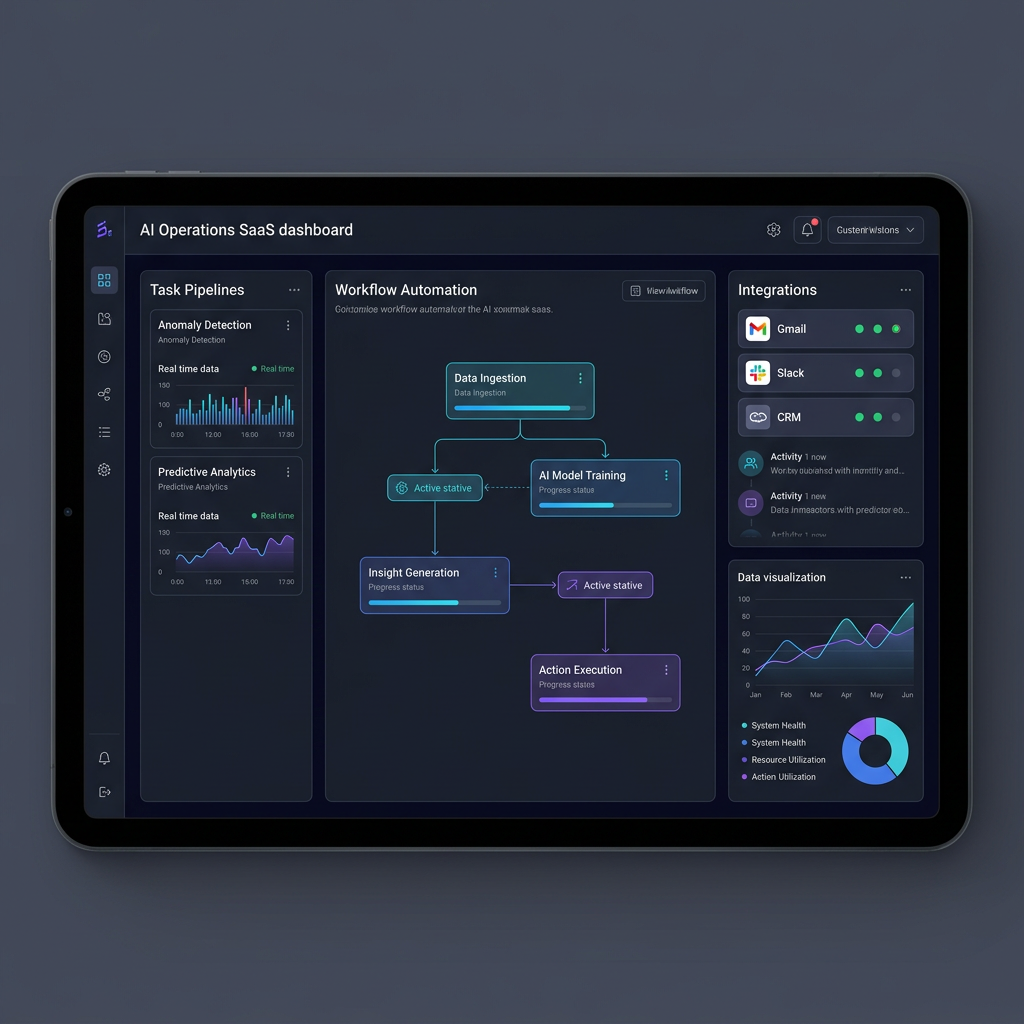
Digital architecture is undergoing a fundamental transformation. For years, launching an enterprise web presence required long development sprints, manual layout tweaking, fragile CSS frameworks, and endless back-and-forth between design and engineering teams.
When building the modern Grux digital experience, we decided to practice what we preach: we utilized autonomous AI workflows and agentic developer loops to design, engineer, polish, and deploy the exact site you are browsing right now.
1. Translating Strategy into Executable Directives
Traditional software development relies on static spec documents that often get lost in translation. With AI workflows, business strategy and brand guidelines are converted directly into structured execution directives.
Instead of manually coding every component from scratch, our team established core brand primitives—typography standards, dark navy and indigo color tokens, interactive button classes, and accessibility requirements. The AI orchestrator consumed these rules and continuously validated new page generation against our design system.
2. Agentic Tool Loops & Rapid Code Generation
The secret to building complex web applications with AI lies in agentic feedback loops. Rather than relying on simple one-shot text generation, our AI workflows operate with active tooling:
- Code Inspection & Refactoring: The AI inspects existing components across the repo to maintain strict architectural consistency.
- Automated Linting & Type Checking: Every generated Astro template and CSS rule undergoes immediate linting and build validation before committing.
- Visual & Contrast Optimization: The workflow automatically computes color contrast ratios to ensure dark cards and light sections remain 100% legible and WCAG-compliant.
- Interactive Logic Integration: From search indexing via Pagefind to custom booking modals, AI workflows wired complex event handlers and global state seamlessly.
3. Continuous Integration & Staging Deployments
A critical advantage of operational AI workflows is the elimination of manual deployment friction. Once a feature or page optimization is created, the AI workflow executes automated build checks, runs end-to-end site verifications, and pushes code directly to our staging branch on GitHub.
This automated pipeline allowed us to iterate on user feedback in minutes rather than days—reordering pricing tiers, refining navigation flows, and tweaking responsiveness on the fly.
4. The Power of Human-in-the-Loop Governance
While AI handles heavy code execution, layout alignment, and state management, human oversight remains paramount. Human-in-the-loop governance guarantees that strategic positioning, security policies, and brand tone remain perfectly aligned with company objectives.
Takeaway & The Future of Operations
Building this website with AI workflows wasn't just an engineering experiment—it proved that autonomous operations offer an unprecedented competitive advantage. What used to take months of engineering bandwidth can now be accomplished with extreme precision, security, and speed.
Want to discover how autonomous AI workflows can transform your core business processes? Take our Free 3-Minute Assessment or explore Grux AI Operations today.


