It's a quarter to five on a Thursday. A new client calls your office. Your front desk is helping someone at the counter, the other line is busy, and the call rings out. The caller doesn't leave a message. They try the next name on their list.
The short answer: If calls are slipping through, yes. An AI receptionist answers every call, day or night, handles the routine requests and passes everything else to your team. In most setups you keep the number your clients already know, so the only change they notice is that someone always picks up.
Missed calls are the real problem
Most offices don't miss calls because nobody cares. They miss them because the people who answer the phone are also checking in clients, chasing paperwork and handling the call already on the line.
The numbers back this up. In 2024, Clio's Legal Trends Report sent secret shoppers to 500 law firms. Only 40% of the firms answered the phone, down from 56% in 2019. Counting firms that called back later, 48% were still unreachable by phone.
Law firms aren't unusual here. Any small office with one or two people at the front desk runs into the same math: two calls at once means one goes to voicemail.
At Grux, our own support line answers in 15 seconds. We hold ourselves to that because, in the medical and financial offices we work with, a missed call is usually a missed client.
What does an AI receptionist do?
An AI receptionist is software that answers your business calls in a natural voice and acts on what the caller needs. Depending on the product, it can:
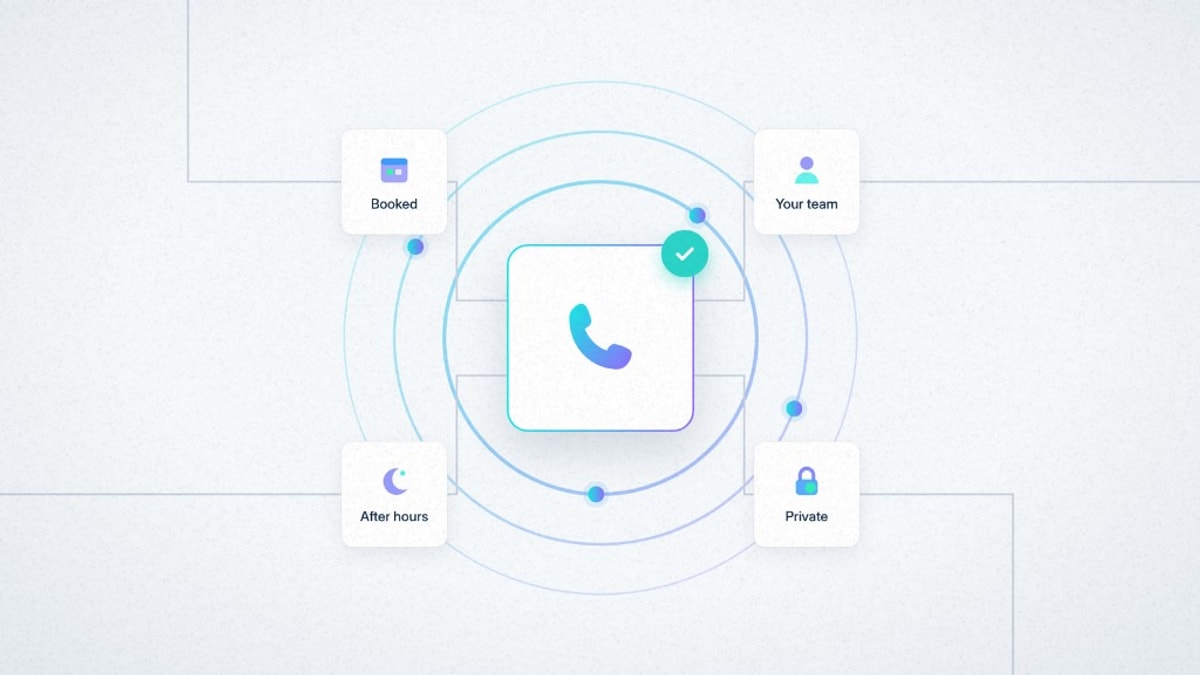
- Answer every call right away, including after hours and when your lines are busy
- Handle common questions like hours, location and what to bring to an appointment
- Book, confirm or reschedule appointments in your calendar
- Take a detailed message and send it to the right person
- Transfer urgent or complicated calls to a staff member
- Keep a written record of every call
The point isn't to keep callers away from your team. It's to make sure the calls that need a person reach one, with the details already written down.
Should you replace your phone system with one?
Yes, and it's easier than it sounds, because you don't have to change your number. Most AI receptionists work through call forwarding. You set your current line to send calls to the AI receptionist, either all the time or only when nobody answers, the line is busy or the office is closed. Clients keep dialing the number on your website and business cards.
That makes it easy to start small. Many offices begin with after-hours calls, see how it handles them, then widen it to busy hours and finally to every call.
Is an AI receptionist worth it?
It's worth it if your office is losing calls today. Three questions will tell you:
- How many calls go to voicemail each week? Your phone system's call log usually shows this.
- How do new clients reach you? If most of them call first, every unanswered call is a lost lead.
- What happens to a call at 6 p.m.? If the answer is "it waits until morning," the caller may not.
Is AI replacing receptionists?
The role is changing more than disappearing. The Bureau of Labor Statistics projects receptionist jobs to decline 2% from 2025 to 2035, and it points to automation as the reason: organizations continue to automate or consolidate administrative work. It still expects about 105,100 openings a year as people retire or change jobs.
In practice, an AI receptionist takes the repetitive calls. Your front desk staff get their time back for the people standing in front of them, the sensitive conversations and the calls that need judgment.
What medical and financial offices need first
In a regulated office, almost every call carries client information. A caller gives their date of birth, a symptom or an account question, and now the system that heard it is handling protected data.
In healthcare, that makes the AI receptionist vendor a business associate under HIPAA. Before it answers a single patient call, you need a signed Business Associate Agreement with the vendor. Financial firms have their own rules for protecting client information, and the same principle applies: the data rules come first.
Before you sign with any AI receptionist, ask:
- Will the vendor sign a Business Associate Agreement, if you're in healthcare?
- Where are call recordings and transcripts stored, for how long, and who can see them?
- How does it hand urgent or sensitive calls to a person?
- Can you see a log of every call it handled?
This section is general information, not legal advice. Check the specifics with your compliance officer or attorney.
What we're building at Grux
We're building AI call handling into the Grux autonomous office, and it will be released soon. It's designed for regulated offices from the start: every call answered, routine requests handled, and anything sensitive passed to your team with the details attached.
Want your front office to run like this?
Frequently asked questions
What does an AI receptionist do?
An AI receptionist answers your business calls in a natural voice. Depending on the product, it can answer common questions, book appointments, take messages, transfer calls to staff and keep a record of every call, including after hours.
Is an AI receptionist worth it?
It's worth it if your office misses calls during busy hours or after closing, especially if new clients usually call first. Check how many calls go to voicemail each week to see how many you're losing.
Can I keep my business phone number?
Yes. Most AI receptionists work through call forwarding, so clients keep calling the number they already know.
Is AI replacing receptionists?
The Bureau of Labor Statistics projects a 2% decline in receptionist jobs from 2025 to 2035, partly because of automation, but still expects about 105,100 openings a year. AI is taking over repetitive calls while front desk staff focus on in-person and sensitive work.
Is an AI receptionist HIPAA compliant?
Only if it's set up that way. A vendor that handles patient information on calls is a business associate under HIPAA and must sign a Business Associate Agreement before it answers patient calls.